The Intersection of Mental Health and Human Rights | Kismayo
This report documents a three-day workshop on the Intersection of Mental Health and Human Rights conducted in Kismayo, Jubbaland State, Somalia, at Hal-door Hotel, starting on 20 January 2026. The ac
Brain Story
Author
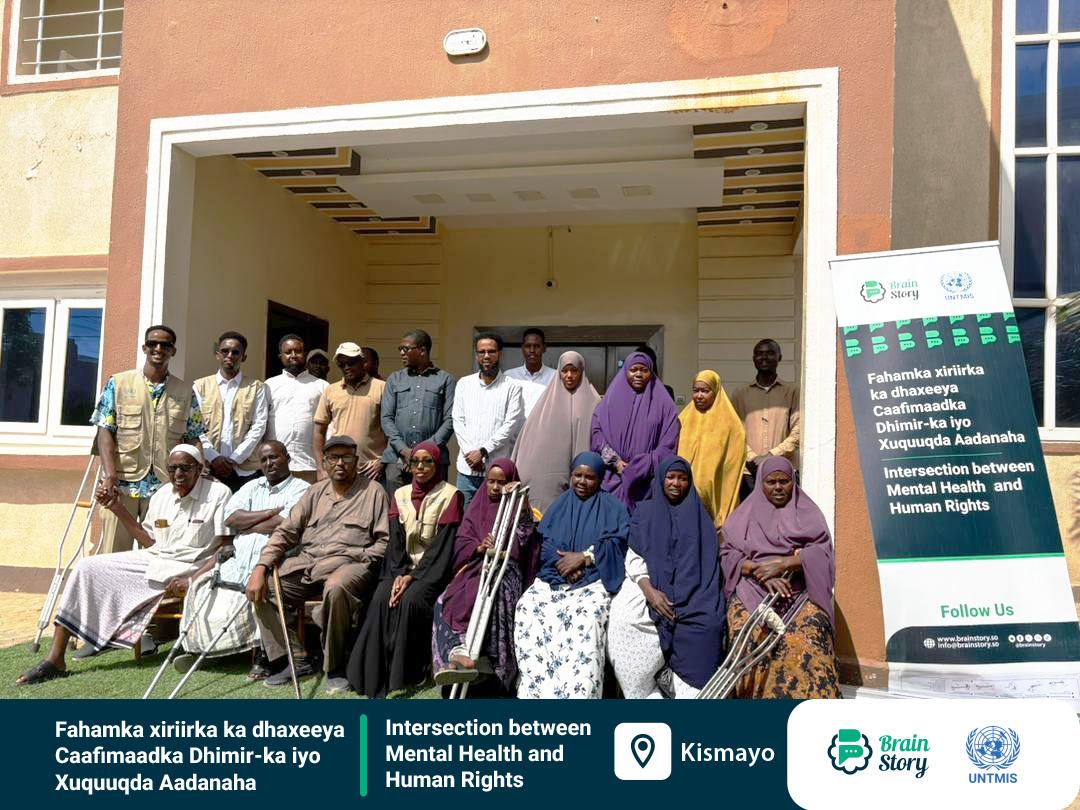
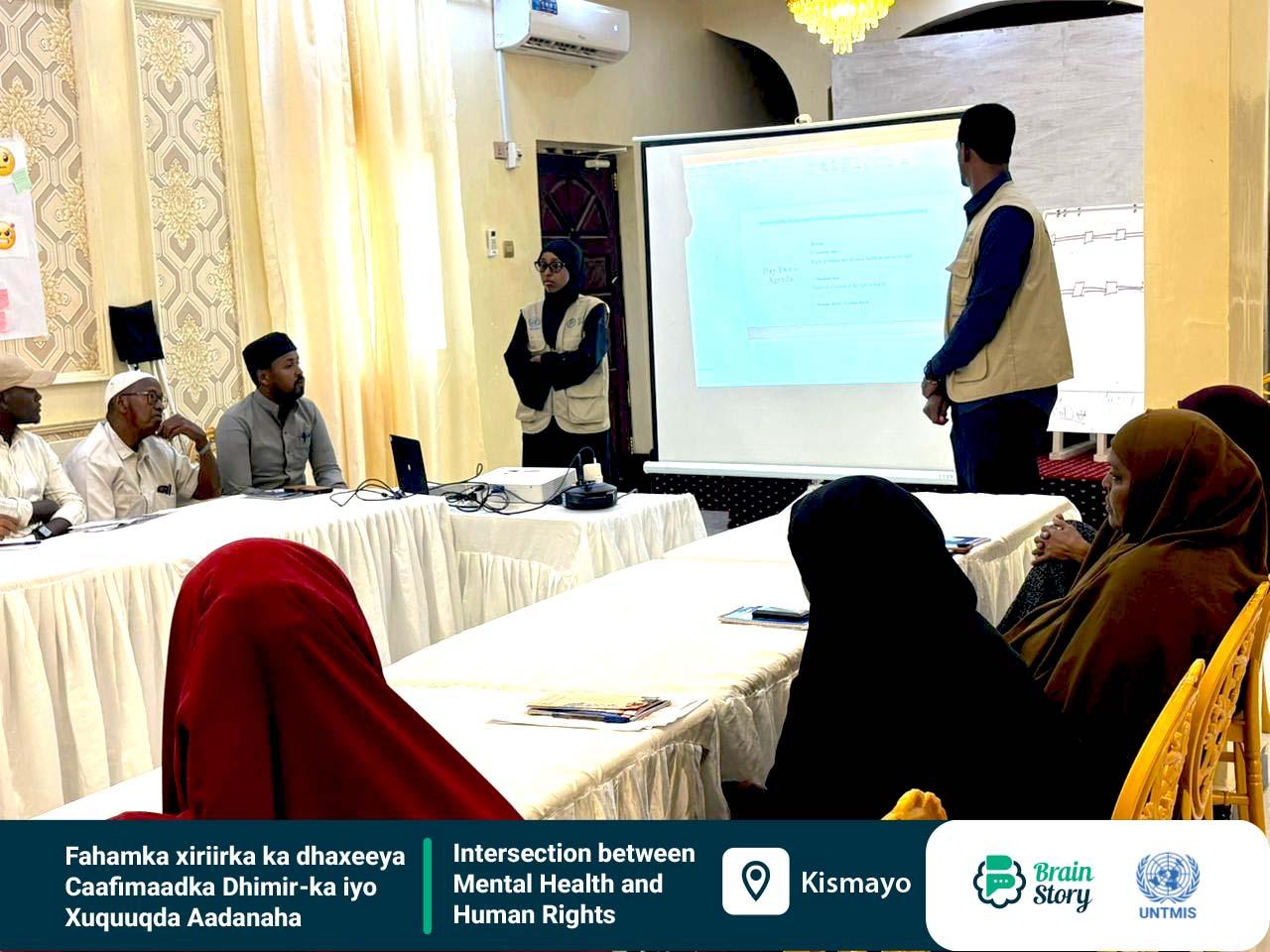
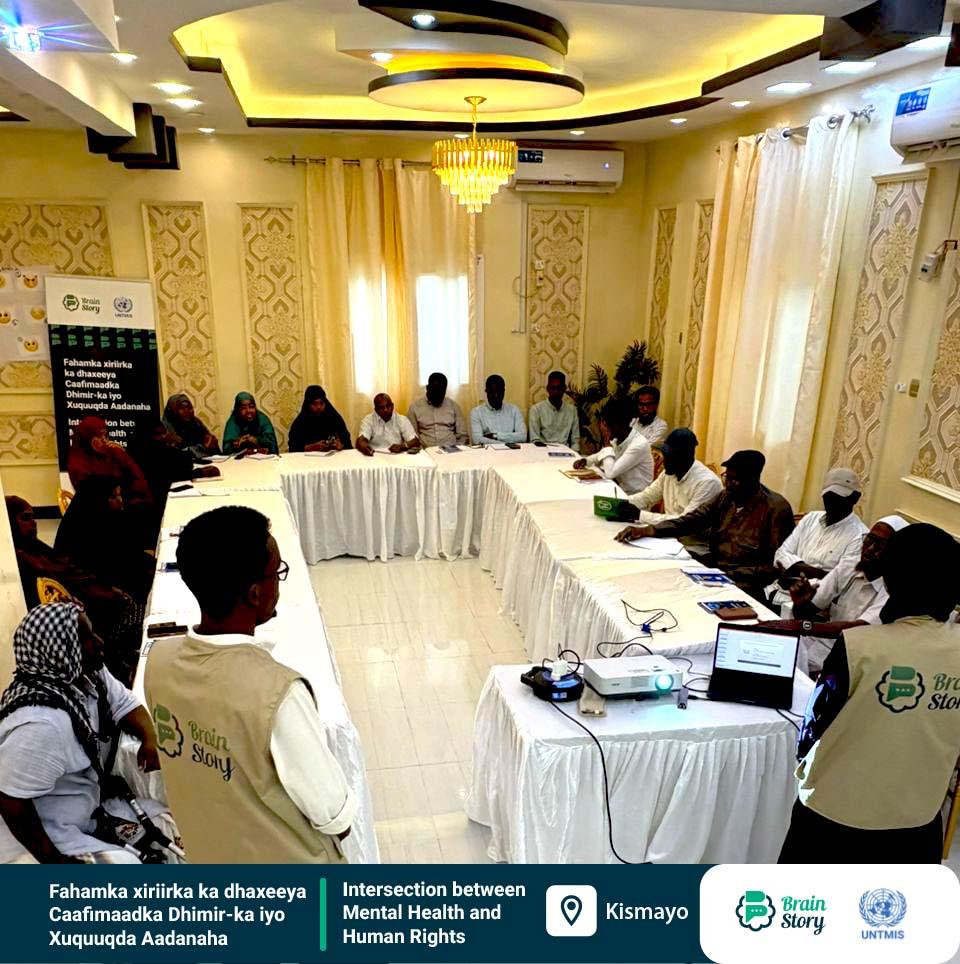
This report documents a three-day workshop on the Intersection of Mental Health and Human Rights conducted in Kismayo, Jubbaland State, Somalia, at Hal-door Hotel, starting on 20 January 2026. The activity was implemented by Brain Story Organization in partnership with and funded by UNTMIS – Human Rights and Protection Group (HRPG).
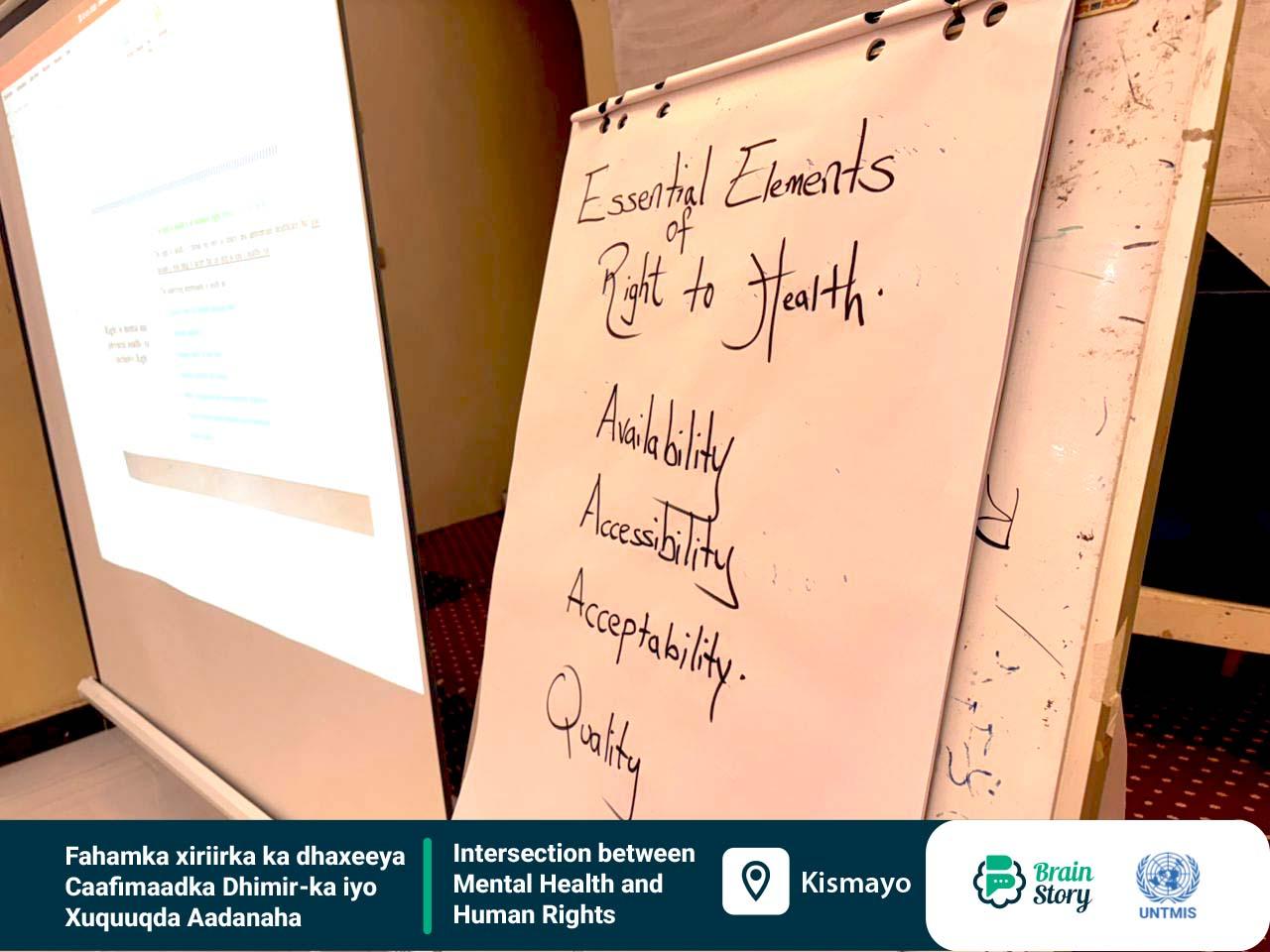
The objective of the workshop was to strengthen understanding of mental health as a fundamental human right, promote a human rights–based approach to mental health, and build the capacity of community actors, health professionals, and government representatives to identify gaps, challenge discrimination, and advocate for inclusive, accessible, acceptable, and quality mental health services.
The workshop was implemented in a context marked by severe underdevelopment of mental health services in Jubbaland State, where only one psychiatrist currently serves Kismayo and no mental health professionals are available in other districts. Mental health awareness remains extremely limited, and many participants reported that this workshop was their first-ever exposure to structured mental health training.
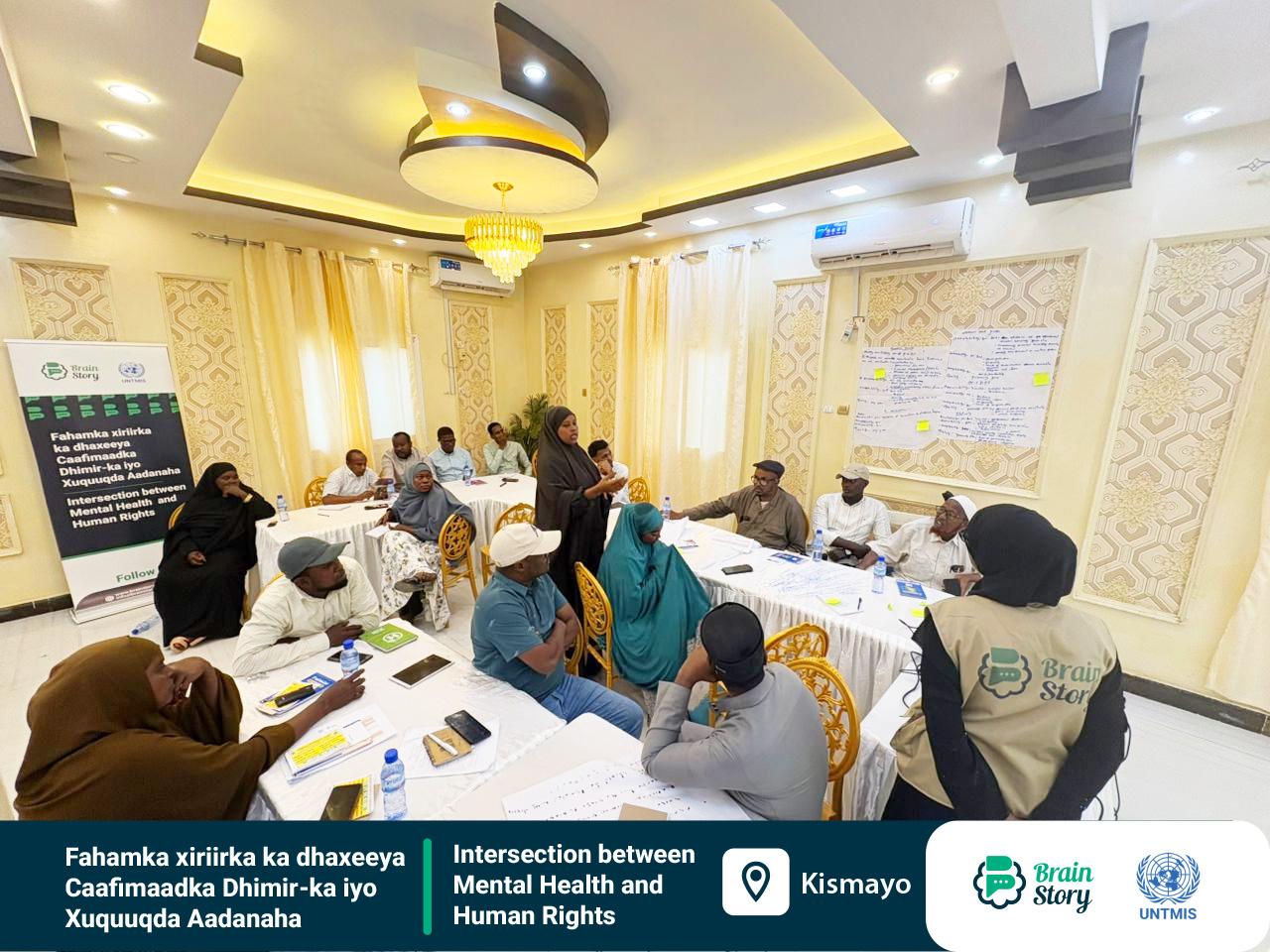
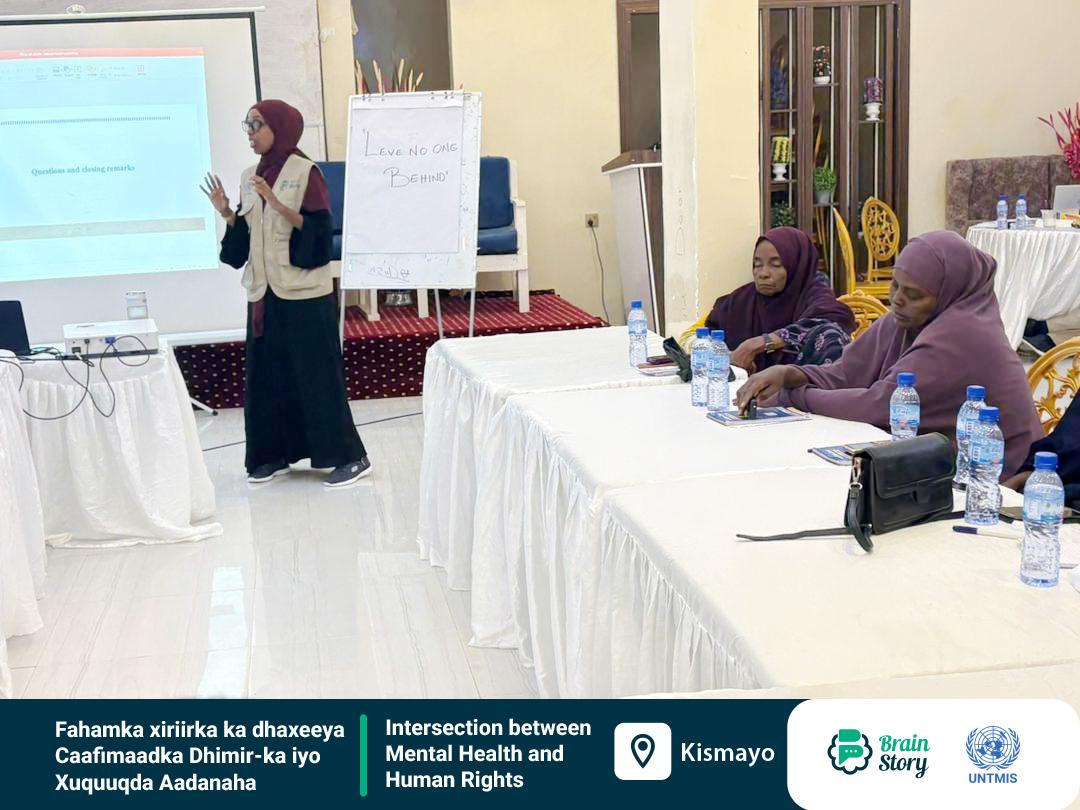
Through participatory sessions, group discussions, and practical exercises, the workshop supported UNTMIS thematic priorities on non-discrimination, equality, dignity, protection of vulnerable groups, and the right to health. Participants demonstrated increased awareness, openly shared lived experiences, and collectively identified systemic gaps and priority actions. The activity achieved its desired outcomes by improving knowledge, shifting attitudes, and generating concrete recommendations for policy, service delivery, and community-level advocacy
Details of the participants
The workshop brought together participants from diverse professional and community backgrounds, ensuring broad representation and inclusive dialogue. Participants included:
- Women, boys, and girls from the community
- Medical professionals, including doctors and one psychiatrist with over 15 years of experience working in Somalia
- Persons with disabilities
- Elders and community leaders
- Federal Member State government officials, including representatives from the Ministry of Health, Ministry of Women and Human Rights, and the Director of Mental Health
Participants represented civil society organizations (CSOs), community-based groups, health sector professionals, and Federal Member State institutions. The diversity of participants ensured that discussions reflected lived experiences, service delivery challenges, and policy-level perspectives.
Equality and inclusion were central to the design and implementation of the workshop. The activity intentionally included women, men, boys, girls, persons with disabilities, elders, IDPs, minority groups, and government officials in all sessions and group discussions.
The workshop created a safe and respectful space where women and girls openly shared experiences of psychological distress linked to gender-based violence (GBV), forced marriage, rape, poverty, and harmful traditional practices such as FGM. Many women stated that this was the first time they learned that professional counseling and psychosocial support were legitimate and accessible options.
Persons with disabilities actively participated, highlighting barriers related to accessibility, stigma, and lack of specialized services. A psychiatrist participating in the workshop shared testimonies about survivors of torture in informal rehabilitation centers, sparking strong discussion on dignity, accountability, and non-discrimination.
Group discussions were intentionally mixed to ensure cross-learning and prevent exclusion. Participants reported increased understanding of discrimination and a stronger commitment to promoting equality and respectful treatment in their communities and institutions.
Three different training publications were distributed during the workshop:
- Leaflets on the right to mental health
- Pamphlets on human rights principles
- Pamphlets on the Intersection of Mental Health and Human Rights, translated into Maay and Maxaa Tiri
A total of 30 copies of each publication were printed and distributed to participants, with additional copies provided for participants to share within their organizations and communities. The workshop agenda was also distributed, and presentation materials were shared digitally with participants.
Knowledge management
The workshop generated critical knowledge on the mental health landscape in Kismayo and Jubbaland State, including service gaps, harmful practices, and systemic discrimination. Key lessons learned include:
- Mental health awareness in Jubbaland is extremely limited, yet communities are open and willing to learn
- Inclusion of government officials and service providers strengthens ownership and policy relevance
- Participatory methods and emotional intelligence exercises enhance engagement and learning
- Addressing mental health through a human rights lens helps challenge stigma and normalize care-seeking
These gaps pose serious risks to patient safety and constitute violations of the right to the highest attainable standard of mental health.
- Leaflets for awareness on the right to mental health
- Pamphlets on human rights principles, translated into local dialects
- Pamphlets on the Intersection between Mental Health and Human Rights, produced in Maay and Maxaa Tiri
Group-based gap analysis mapping mental health service availability, accessibility, acceptability, and quality in Kismayo and Jubbaland State
During the workshop, women participants shared that they had lived for years believing emotional suffering was something to endure in silence. After learning about counseling and psychosocial support, several women expressed relief and hope, stating that they now understood mental health support as a right rather than a myth.
A psychiatrist shared stories of individuals subjected to torture in informal rehabilitation centers. Participants reacted with shock and empathy, leading to a strong collective call for regulated, humane, and rights-based mental health services. These stories marked a visible shift in attitudes, from normalization of abuse to advocacy for dignity and protection.
Testimonies from the Ministry of Health, a disabled community leader, and members of the women’s group confirmed that people living with HIV (PLHIV) in Kismayo and other parts of Jubbaland State face severe stigma, discrimination, and fear of exposure. While records indicate over 450 people living with HIV, stakeholders believe the actual number is significantly higher, as many individuals avoid testing and treatment due to fear of social exclusion and long-term consequences for their families and livelihoods.
Although antiretroviral medication is available, the Ministry of Health confirmed that medicines expire annually because PLHIV do not access care. This demonstrates that the main barriers are acceptability and accessibility, driven by stigma and lack of trust in confidentiality. Women reported fears of ostracization, family rejection, and loss of marriage or employment opportunities, while persons with disabilities face double discrimination. These findings highlight serious violations of the right to health, dignity, confidentiality, and non-discrimination, and the urgent need to integrate HIV stigma reduction into mental health and human rights programming.
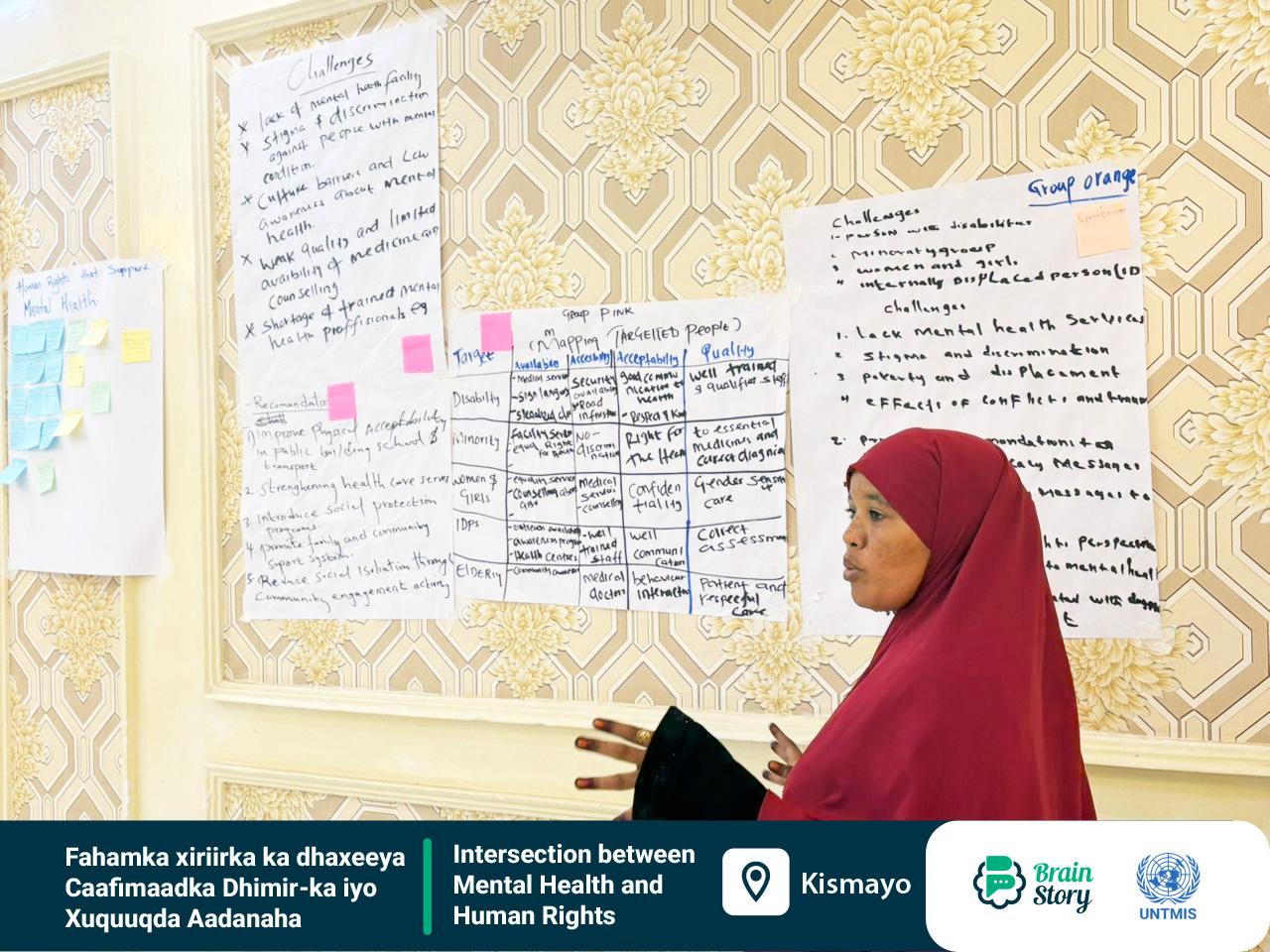
Challenges and recommendations:
Challenges
- Severe shortage of mental health professionals in Jubbaland State
- Lack of mental health facilities and counseling services
- Widespread stigma and discrimination
- Harmful traditional practices and unregulated rehabilitation centers
- Weak availability of medicines and psychosocial support
Recommendations
- Strengthen mental health awareness campaigns across urban and rural areas
- Integrate mental health and psychosocial support into primary healthcare
- Train and certify mental health professionals
- Improve accessibility and acceptability of services for women, persons with disabilities, minorities, and IDPs
Strengthen policy commitment and accountability at Federal Member State level